

Pergola vs Veranda: What’s the Difference?
If you’ve ever stood in your garden thinking this space could be more useful, more comfortable, or just a bit more inviting, you’re already halfway to the pergola versus veranda question. Both structures promise better outdoor living. Both look great when done properly. And both can add real value to how you use your home.
But they aren’t interchangeable. Not really.
The difference isn’t about which one looks nicer on a brochure. It’s about how you live, how much flexibility you want, and how you feel about weather dictating your plans.
Let’s talk it through properly.
Pergola and veranda aren’t rivals, they’re close relatives
At first glance, pergolas and verandas can look similar. Posts, roof, defined space. Job done. But once you start using them day to day, the contrast becomes clear.
A veranda is about coverage and enclosure.
A pergola is about choice and adaptability.
That single idea runs through everything else.
What actually is an aluminium pergola?
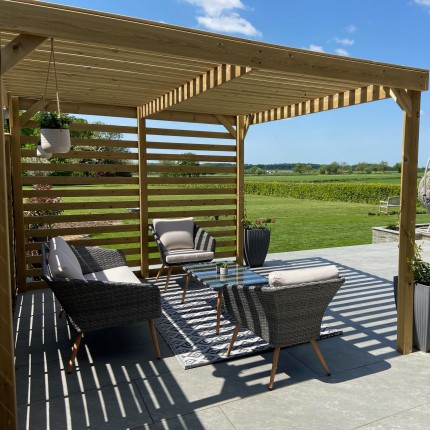
An aluminium pergola is a garden structure made entirely from aluminium, usually freestanding or wall mounted. Its defining feature is the louvered roof. Those slats rotate and adjust, giving you control over how much sun, shade, or light rain you allow into the space.
Sunny morning and you want warmth on your face? Open them.
Midday glare making everything uncomfortable? Angle them.
Light rain drifting through? Close them enough to stay dry while keeping air moving.
Side blinds can be added for privacy or shelter, and many pergolas can take extras like heaters, LED lighting, or even glass panels later on. That’s why people often describe pergolas as flexible rather than fixed.
They adapt to the day rather than forcing you to adapt to them.
Why people love pergolas
-
They let you choose between sun, shade, and rain protection
-
The space feels open and breathable, not boxed in
-
Perfect for dining, cooking, lounging, or working outdoors
-
Can be upgraded with heaters, lighting, blinds, or glazing
-
Installation is usually simpler than fully enclosed structures
So what is a veranda, really?
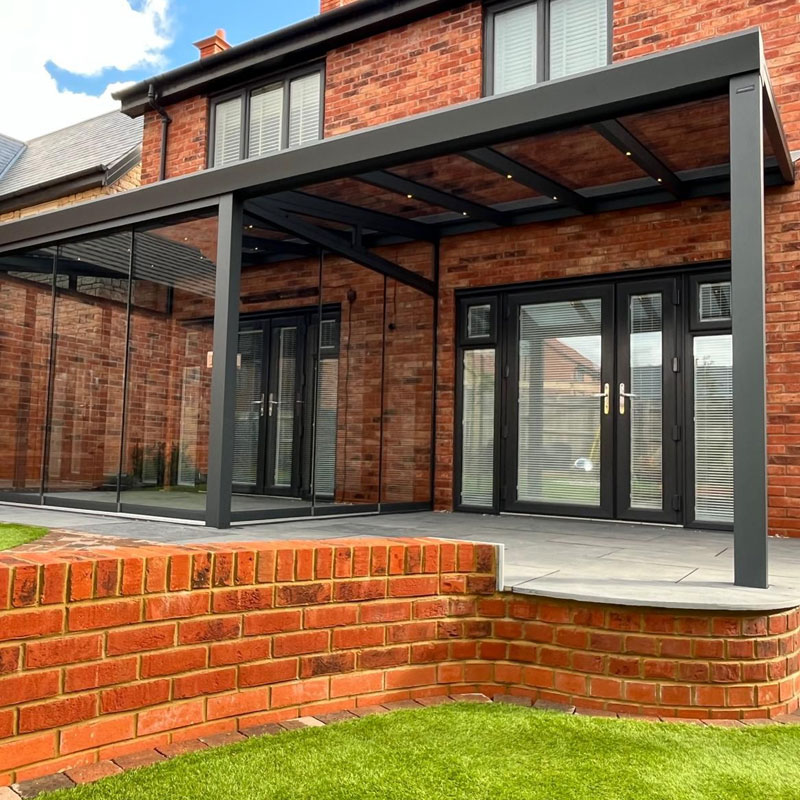
A veranda is more like an open air extension of your home. It’s almost always attached to the house and tends to run along one side, either at the front, rear, or sometimes wrapping around a corner.
Unlike a pergola, a veranda has a solid roof. Many also include glazed side walls and large glass doors. The result is a space that feels closer to a conservatory than a garden feature.
The big advantage here is certainty. A veranda blocks rain properly. It blocks wind. It creates a sheltered zone you can rely on without checking the forecast every five minutes.
That reliability is exactly why some homeowners prefer them.
Why verandas appeal
-
Strong protection from both sun and rain
-
Seamless visual connection with the house
-
Feels like an extra living space rather than a garden add on
-
Works well for dining, relaxing, or even as a carport
-
Glazing allows light in while keeping weather out
The roof changes everything
Here’s the part many people overlook at first. The roof determines how the space feels.
A veranda roof is fixed and solid. That’s brilliant for shade and rain protection, but it also means the light never changes. You don’t get direct sun when you want it. You don’t get airflow from above. The environment stays consistent, for better or worse.
A pergola roof moves. It responds. You trade full weather sealing for control. On warm days, that control feels priceless. On wet days, it depends on what you’re doing.
Neither approach is wrong. They just suit different lifestyles.
Pergola vs veranda at a glance
Pergola
Freestanding or wall mounted
Adjustable louvered roof
Rain protection but not fully watertight
Side blinds rather than fixed glazing
Open, flexible feel
Generally a simpler installation
Veranda
Attached to the home
Solid, non adjustable roof
Can be completely watertight
Often glazed side walls
Feels like an enclosed extension
Usually a more complex install
How do you actually plan to use the space?
This is the question that matters more than materials or price.
If you imagine slow mornings with coffee in the sun, cooking outdoors, watching the light shift during the day, and adjusting the space as conditions change, a pergola usually feels right.
If you imagine guaranteed shelter, furniture that stays dry, and a space that works almost regardless of weather, a veranda probably suits you better.
Off grid homeowners often lean toward pergolas because airflow, light control, and flexibility matter. Homes that rely on extending indoor living space often lean toward verandas for their reliability and enclosure.
A quick word about seasons
Pergolas tend to shine in spring and summer. Air moves freely. Light feels alive. Shade comes when you need it and disappears when you don’t.
Verandas feel strongest in winter. Wind and rain stay out. Add heating and the space stays usable when the rest of the garden shuts down.
Some homeowners eventually combine both. A veranda close to the house, and a pergola further out. It sounds excessive until you realise how differently you use each one.
Final thoughts
Choosing between a pergola and a veranda isn’t really about which structure is better. It’s about which one fits how you live.
If you want flexibility, openness, and control over sun and shade, an aluminium pergola is hard to beat.
If you need something fully watertight that feels like a natural extension of your home, a veranda is the clear choice.
Work out how you want the space to feel on an average day, not a perfect one. Once you do that, the decision usually makes itself.
